When the Load Leans, the Truck Follows
There’s a stretch of I-35 south of town where crosswinds hit harder than drivers expect, especially in the open sections. We’ve seen empty trailers get pushed just enough to start a sway that builds into something worse. A lot of our I-35 semi recovery calls come out of spots like that, where the road feels easy right up until it isn’t. When trucks run into difficulties and semis rollover, most of the time, it’s not one clear cause. It’s not just speed or just weather. It’s a handful of small decisions lining up at the wrong moment.
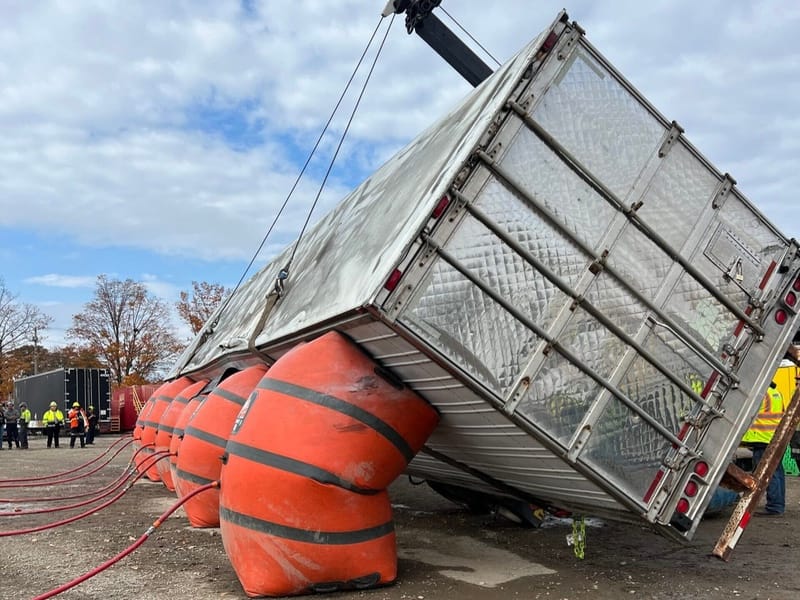
The Weight Doesn’t Sit Where You Think It Does
A lot of drivers assume their load is stable as long as it’s secured. That’s not always how it plays out on I-35. We’ve seen trailers loaded heavy toward the rear start to sway on long curves, especially near older interchange ramps with uneven pavement.
Liquid loads are even trickier. Tankers shift mid-turn, and that lag catches drivers off guard. By the time the trailer leans, the tractor is already getting pulled sideways.
Ramps Often Aren’t Built for Forgiveness
Some of the ramps along I-35 were designed decades ago. Tight radius, short merge lanes, and inconsistent banking. You feel it more in a high-center-of-gravity load.
We’ve worked rollovers where the posted ramp speed said 45 mph, but the truck really needed to be closer to 30. Especially in rain. Or worse, sleet. That margin matters more than people think.
Small Steering Corrections Turn Into Big Problems
Once a trailer starts leaning, drivers often try to correct quickly. That sharp steering input can shift weight even faster in the opposite direction. Now the whole rig rocks instead of stabilizing.
We’ve seen trucks roll the opposite way after the initial lean. That second movement is what usually puts it on its side.
Load Shifts Happen Even When Secured
Straps and bars don’t stop everything. Pallets can settle. Freight can compress. A load that felt tight leaving Dallas might not feel the same 200 miles later.
That’s something we factor into every I-35 semi recovery job. We assume the load has moved until we prove otherwise.
Weather Changes Faster Than Drivers Adjust
I-35 cuts through zones where weather flips quickly. Dry pavement turns slick in minutes. Early morning frost hangs around shaded overpasses longer than expected.
We’ve pulled trucks out after light rain that didn’t look like a big deal. But oil buildup on the road made it just slippery enough to lose traction mid-turn.
Here’s what we see drivers underestimate most:
- Light rain after a dry spell
- Early morning black ice near bridges
- Crosswinds in open stretches south of the city
- Sudden slowdowns on downhill grades
Each one by itself isn’t always a problem. Stack two or three together, and that’s where I-35 semi recovery calls start coming in.
Speed Is the Factor Nobody Wants to Talk About
We hear it all the time. “I wasn’t going that fast.” And most of the time, that’s true in a general sense. They weren’t speeding on the highway.
But ramps and curves are different. A safe highway speed doesn’t translate to a safe ramp speed.
Dropping speed earlier makes a bigger difference than braking late. Once weight shifts, braking won’t fix it. At that point, we’re already getting ready for another I-35 semi recovery dispatch.
Experience Changes How You Read the Road
Drivers who’ve been through a near-tip situation tend to adjust how they approach curves. They start reading pavement, wind, and traffic a little differently.
That awareness shows up in fewer calls for I-35 semi recovery tied to those drivers.
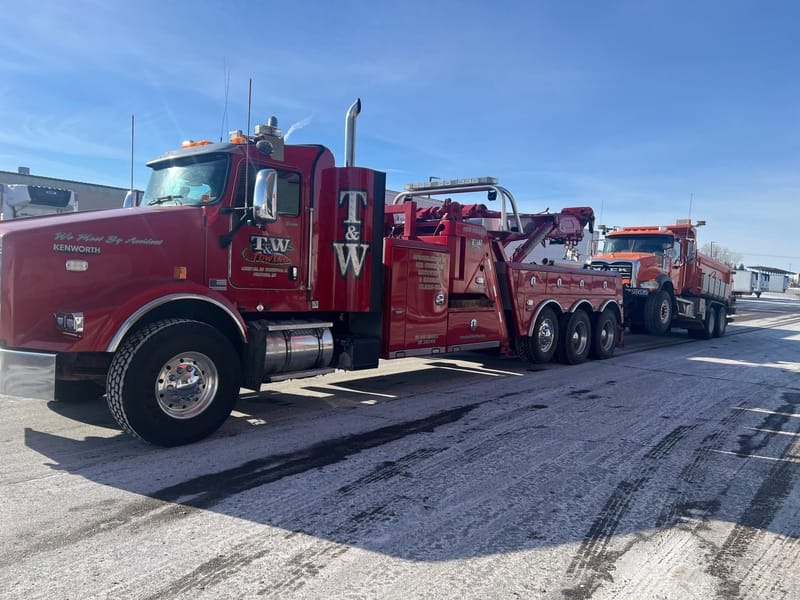
How T&W Towing Handles I-35 Semi Recovery in Real Conditions
At T&W Towing, most of our I-35 semi recovery work happens in less-than-ideal conditions. Early mornings. Bad weather. Tight spaces on ramps with traffic still moving nearby.
We usually start by stabilizing the trailer before any lift. That might mean offloading part of the cargo or securing loose freight that shifted during the rollover. Some recoveries take an hour. Others stretch into half a day depending on load and position.
Around here, we see a lot of incidents near older interchanges and construction zones where lanes shift unexpectedly. It’s not unusual for us to be working a recovery while traffic squeezes by just a few feet away. That’s just part of running calls along I-35.
FAQs
What is the most common cause of a semi rollover?
Speed going into a curve is the biggest factor. Not highway speed, but how fast the truck enters ramps or turns. Load balance and road conditions usually play a role too.
Do empty trailers roll over more easily than loaded ones?
They can. Empty trailers sit higher and catch more wind, which makes them less stable. Strong crosswinds can push them enough to start a sway.
How do drivers know if their load is unbalanced?
Sometimes you can feel it in the way the trailer tracks behind the tractor. Uneven tire pressure or slight pulling in turns can be a sign. It is not always obvious until the truck is under stress.
Are exit ramps more dangerous than highway driving?
Yes, especially older or tighter ramps. They require slower speeds and smoother steering. Many rollovers happen in these short transition areas.
What should a driver do if a trailer starts to lean?
Avoid sudden steering or braking. Keep movements gradual and reduce speed carefully. Overcorrecting is what often makes the situation worse.
How long does it take to recover a rolled-over semi?
It depends on the load and position of the truck. Some recoveries take about an hour, while others can take several hours. Cargo shifts and traffic conditions can slow things down.