It Works Until it Doesn’t
There’s a version of this story that ends fine: a friend’s car breaks down, someone with a truck hooks up a strap, and twenty minutes later the vehicle is where it needs to be. Northwood towing calls go that way sometimes. The gap between that outcome and a failed connection or a sway incident on the highway is usually smaller than the driver realizes, and the difference mostly comes down to equipment and preparation most DIY towers don’t have.
The Gear Gap
Most drivers who attempt a DIY tow look at their truck, look at their hitch, and assume the rest is manageable. A closer look at weight ratings, tongue load, and brake requirements usually complicates that picture in a hurry.
Hitch Ratings and Tongue Weight
Every hitch has a gross trailer weight rating and a tongue weight limit, and both numbers matter independently. Tongue weight, the downward force the hitch receives from the towed load, should fall between 10% and 15% of the total load. Too little and the rear of the tow vehicle lifts, reducing steering control. Too much and the front wheels lose contact pressure, which affects braking. Most drivers have never checked their hitch rating, and fewer still have calculated tongue weight before hooking up.
Safety Chains and Brake Controllers
A tow strap is not a complete tow setup. A proper connection uses safety chains crossed in an X pattern beneath the coupler, so that if the primary connection fails the towed vehicle doesn’t become a hazard in traffic. Vehicles above a certain weight also require a brake controller, a device that activates the trailer brakes in sync with the tow vehicle. Towing a heavier vehicle without one extends stopping distances significantly and puts both vehicles at risk on any road with moving traffic.
What Happens When Things Go Wrong
The most common DIY towing problem is trailer sway, and it tends to catch drivers off guard. A towed vehicle can begin swaying side to side, and the instinct to steer against the motion or hit the brakes can amplify the oscillation rather than stop it. Common DIY tow failures that turn into roadside emergencies include:
- A tow strap snapping under load and striking nearby vehicles or bystanders
- The towed vehicle’s wheels locking up with no way for the tow driver to compensate
- Tongue weight lifting the front of the tow vehicle and reducing braking ability
- The connection failing at speed and releasing the towed vehicle into traffic
This is the kind of situation that professional our Northwood towing service prevents before it starts.
The Liability Part Nobody Talks About
Most personal auto insurance policies do not cover damage that happens to another vehicle while you are towing it. If the connection fails and the towed vehicle is damaged, or if it strikes another car, the coverage situation becomes complicated quickly.
A Northwood towing professional carries commercial insurance that covers the vehicle in transport, the equipment in use, and any incident that occurs during the job. That protection doesn’t come with a tow strap from a hardware store, and the liability for anything that happens on the road during a DIY tow falls squarely on the person who hooked up the strap.
T&W Towing Has Northwood Towing Handled
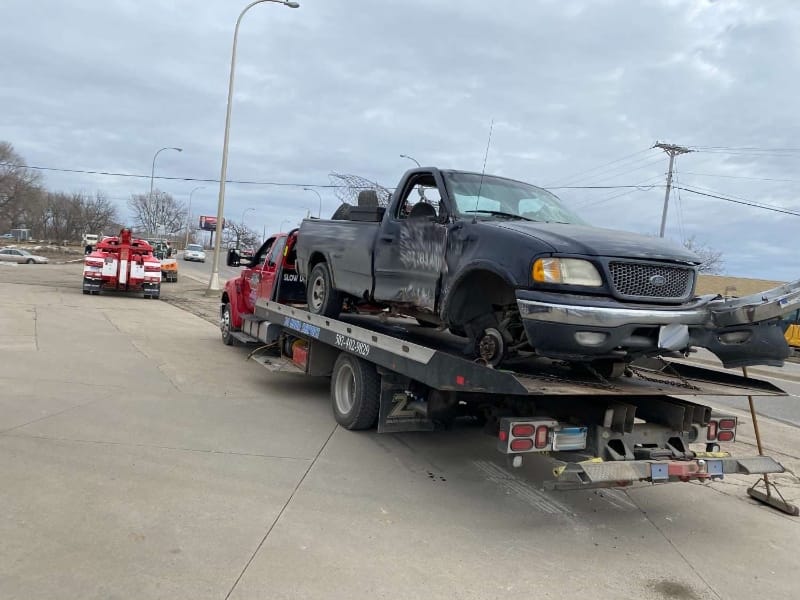
When a vehicle breaks down and needs to move, T&W Towing provides Northwood towing service with the right equipment for the job. We use flatbeds and wheel-lift units, and every load is secured before we pull onto the road. Our Northwood towing team handles vehicles of all sizes, from passenger cars to larger trucks, without creating new problems in the process.
Calling T&W Towing costs less than a deductible and puts the risk where it belongs. When a rushed DIY attempt turns into an accident or a secondary recovery call, it means more expense and more stress for everyone. For Northwood towing done right the first time, we are the call to make.
FAQ
Is it legal to tow someone else’s car yourself?
In most states, towing another vehicle without proper lighting, safety chains, and a compliant connection is a traffic violation. Requirements vary by state, but at minimum the towed vehicle needs working brake lights and turn signals visible to drivers behind it. Towing without meeting those standards can result in a citation and also exposes you to additional liability if an accident occurs.
Does someone need to be in the towed vehicle to steer it?
It depends on the towing method. When you tow a vehicle with a strap or tow bar with all four wheels on the ground, many states require a licensed driver in the towed vehicle to operate the steering and brakes. On a flatbed, the vehicle is fully loaded and no driver is needed. Flat towing rules vary, so checking your state’s requirements before you hook up is worth the time.
Can towing a vehicle damage its transmission?
Yes, if done incorrectly. Front-wheel-drive and all-wheel-drive vehicles can suffer transmission damage when towed with the drive wheels on the ground, because the drivetrain spins without the engine providing lubrication. Most manufacturers specify whether a vehicle can be flat towed, and many require a flatbed or a dolly if it cannot. Ignoring that spec can result in a repair bill that far exceeds the cost of a tow truck.
What is trailer sway and how do you stop it?
Trailer sway is a side-to-side oscillation that develops when a towed vehicle or trailer begins to move independently of the tow vehicle. It’s usually triggered by speed, crosswind, or improper weight distribution. The correct response is to ease off the accelerator gradually without braking, which allows the vehicles to slow and stabilize. Applying the brakes or steering against the sway almost always makes it worse.
What is a brake controller and when is it required?
A brake controller is an electronic device that signals the towed vehicle’s brakes to engage when the tow vehicle brakes. Most states require one when the towed load exceeds a set weight, typically between 1,500 and 3,000 pounds depending on the state. Without it, the tow vehicle is doing all the braking work for both vehicles, which extends stopping distances and increases the risk of the towed vehicle pushing the tow vehicle through intersections.
What happens if the tow connection fails on the road?
If safety chains are in place and properly crossed, they catch the towed vehicle and keep it from separating completely. If there are no safety chains, or if they are too long to do their job, the towed vehicle can break free and become an uncontrolled hazard. That scenario creates liability exposure for the driver, potential criminal charges depending on the outcome, and damage to vehicles and property that personal auto insurance typically will not cover.