A Tire Call Can Change Quickly
Semi tire calls can sound routine at first. A driver reports a blown steer tire, asks for a tire and a jack, and figures the truck will roll once the rubber is replaced. Then the crew gets eyes on it. Torn air line, bent bracket, damaged rim, and suddenly Bricelyn semi towing is the only real call to make here.
A blown tire on a loaded vehicle can do more than leave debris behind. At highway speed, tread can hit brake chambers, ABS wiring, fuel tank shields, mudflaps, and suspension mounts. If the truck loses air or the wheel area is full of bent metal, a tire swap will not get it back on the road.
Why a New Tire May Not Fix the Truck
A clean blowout leaves a mess, but the truck still functions. The axle is clear, the wheel turns, and the brakes release. Those calls usually belong to a tire service truck, assuming the shoulder is wide enough and the ground is stable.
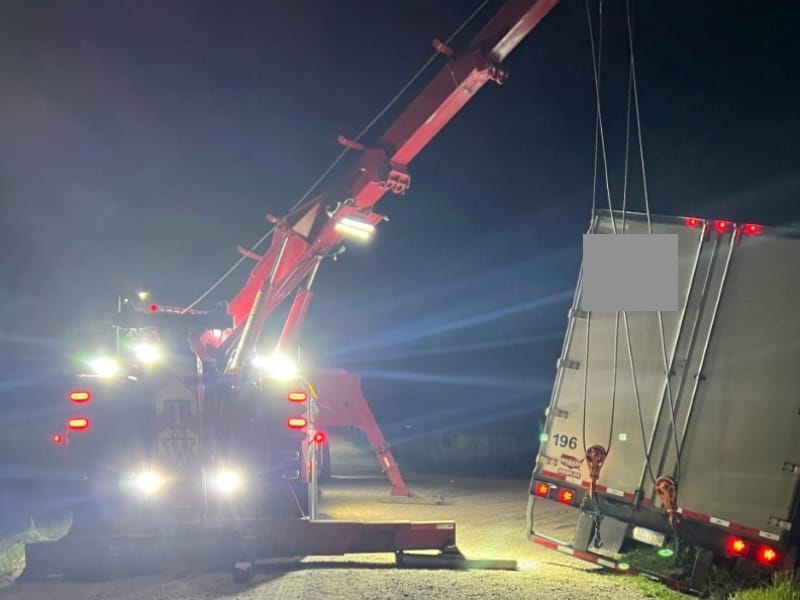
The harder calls look worse up close. Rubber gets wrapped around the axle. An air line leaks too fast for the system to build pressure. A bracket bends into the wheel well. We have seen drivers try to creep forward after a blowout and turn a tire job into brake, rim, and steering damage.
The Checks That Tell Us What Still Works
Before we hook up, we need to know if the truck can roll, steer, and stop. Air pressure comes first. If the system cannot hold air, the brakes may stay locked or release unevenly. A short move with low air can ruin a wheel end or start heat building around the brake drum.
A few details decide the next move:
- Which tire failed
- What parts are hanging or dragging
- If the tractor can build air
- If the trailer is loaded or empty
- If the truck is blocking a lane
- Where the fleet wants the unit delivered
Road Position and Load Narrow the Plan
On Bricelyn semi towing calls, the shoulder can matter as much as the broken tire. A truck fully off the lane gives us more room to set the wrecker and inspect the damage. A rig leaning into soft ground near I-90 or sitting close to traffic gives us fewer choices.
Cargo changes the setup too. A loaded reefer, tanker, or sealed van may need a different plan than an empty trailer. Sometimes Bricelyn semi towing means moving the tractor only and letting a backup truck take the trailer. Sometimes the full combination has to move together because the load cannot sit roadside.
Brake Damage Changes the Whole Move
Bricelyn semi towing after a tire failure often starts with the air system, not the tire. A torn line can keep brakes from releasing. Damaged glad hands or fittings can leave the trailer stuck. From fifty feet away, the truck may look like it only needs rubber, but underneath it may be locked in place.
If the damaged wheel will not roll, we may need to lift that axle or adjust the hookup so nothing drags. With Bricelyn semi towing, forcing movement is usually what makes the repair worse. The better move is slower at first: inspect, lift what needs lifting, and get the rig clear without tearing up another part.
T&W Towing Handles Bricelyn Semi Towing When Tire Damage Spreads
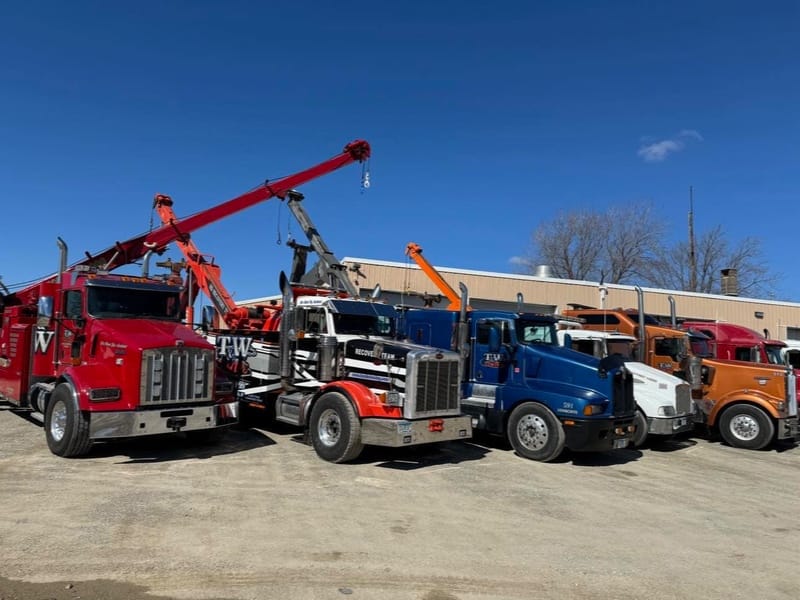
T&W Towing has handled heavy-duty towing and recovery work in southern Minnesota and northern Iowa for years. Our fleet includes a 5-winched Rotator with Side-Puller, wreckers from 8 to 50 tons, Landolls, Lowboys, and the area’s only Air Cushion Recovery System. That range helps our Bricelyn semi towing team respond when a blown tire turns into brake damage, air loss, or a disabled tractor-trailer.
We also pay attention to who we send on these calls. Our operators hold advanced certifications and train with experienced drivers who know air systems, suspension, and weight transfer during hookup. Near I-90, I-35, Highway 22, and Highway 13, one blown tire can turn into a long delay fast, especially before a weather shift or evening traffic.
FAQs
Can a blown semi tire damage the brake system?
Yes. Shredded rubber can hit brake lines, fittings, chambers, and nearby wiring. If the truck loses air pressure, the brakes may not release correctly.
How do I know if a semi needs a tow after a blowout?
A tow may be needed if the truck has air loss, a locked brake, a bent rim, suspension damage, or parts dragging near the wheel. Road position matters too.
Is it safe to drive a semi after the tire shreds?
Usually, no. Driving on a damaged tire or rim can ruin wheel ends, brake drums, hubs, wiring, and suspension parts. Stop as soon as you can get out of traffic.
Can a loaded trailer stay with the tractor during towing?
Sometimes. If the trailer brakes, air lines, and load are stable, the full combination may be moved together. If the tractor is the only damaged part, a swap may be better.
Why does air pressure matter after a tire failure?
Commercial truck brakes depend on air pressure. A torn air line can leave brakes locked, dragging, or releasing unevenly.
What should a driver tell dispatch after a tire blowout?
Share the nearest marker, travel direction, failed tire position, visible damage, trailer type, and load status. Photos of the wheel area help the crew prepare.