The Environment Shapes Every Dispatch Decision
A highway call and a city call both start with a phone ring. The information that comes through that ring determines the next couple of steps. A motorist on an interstate corridor and one in a downtown parking garage unsurprisingly need very different responses. Our Mankato towing team makes that read at dispatch, before any tow truck unit is assigned in the first place.
Highway calls generate immediate equipment questions. What type of vehicle? On the shoulder or off the road? What does the scene look like? City calls bring different questions: access points, overhead restrictions, staging space. Each set of answers shapes which unit goes out and how the crew prepares for arrival.
On Scene, the Road Type Changes How the Whole Job Runs
Highway shoulders operate with live traffic just feet from the crew. Scene control comes before any rigging. Lights go up, the truck positions as a buffer, and a clear work zone is set before recovery begins. A highway embankment recovery adds rigging complexity on top of that. The crew manages exposure and mechanics at the same time throughout the job.
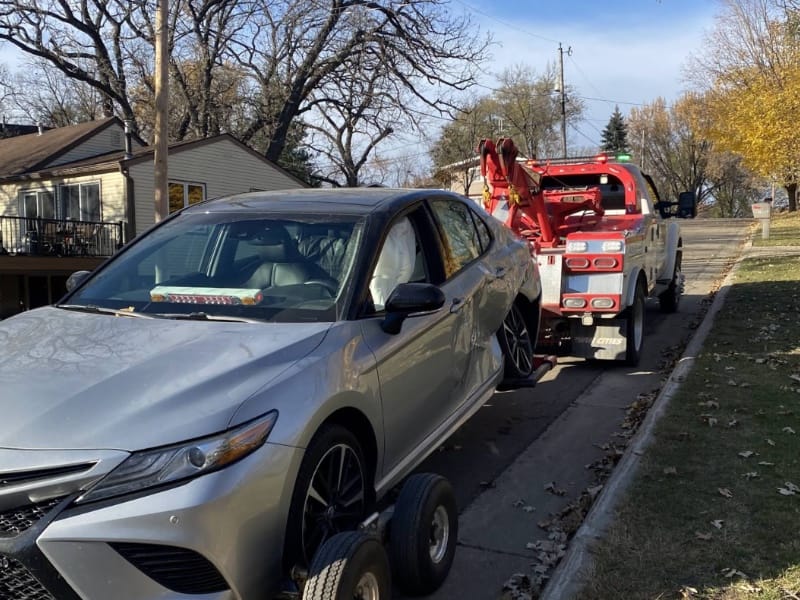
City scenes take away the highway exposure and replace it with spatial constraints. Overhead utilities, parked vehicles, building setbacks, and limited maneuvering room all shape how equipment is placed. A wheel-lift or flatbed works differently on a narrow commercial block than on an open highway approach. Our operators build a clearance read before positioning on every urban call.
What a Vehicle Stuck Off the Side of an Interstate Tells the Crew
A vehicle that has left the roadway on an interstate scene is a recovery call, not just a tow. Our Mankato towing operators assess terrain, angle, and access before committing to a rigging plan. The Air Cushion Recovery System and extended rotator configurations handle off-road extractions that standard equipment cannot reach. Winching, not hooking up, is step one on those calls.
How the Two Road Types Break Down at a Glance
Here is what typically separates the two:
- Highway calls require scene lighting and a protective buffer before any recovery work begins
- Off-road highway recoveries need winching, rigging, and terrain assessment before transport
- Active corridor work requires the crew to manage live traffic exposure throughout
- City and local calls require overhead and staging assessment before equipment is deployed
- Urban scenes call for compact, maneuverable units on tight blocks and commercial lots
- Every Mankato towing dispatch is confirmed against road type and vehicle position before departure
T&W Towing: Mankato Towing Backed by a Fleet Built for Every Road Type
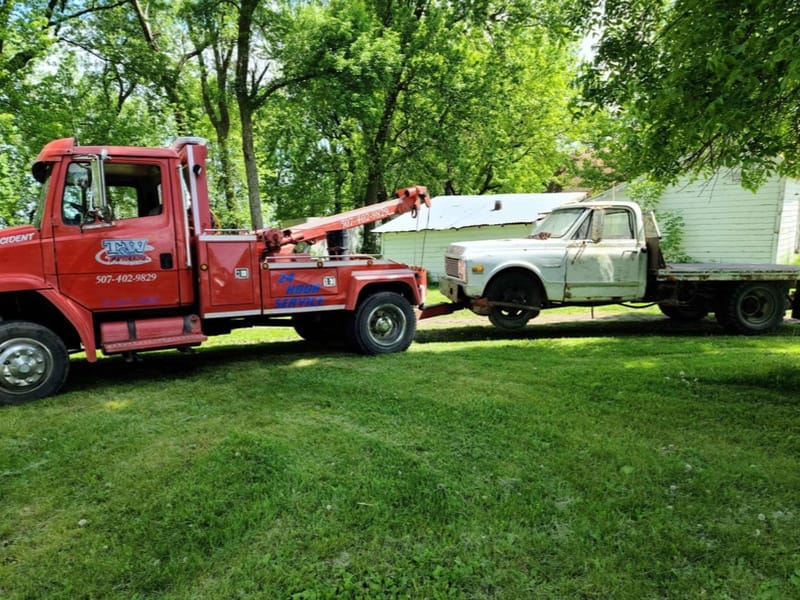
T&W Towing has grown from a single light-duty wrecker into a fleet of nearly 30 pieces of equipment. That fleet includes the area’s only Air Cushion Recovery System and a 5-winched Rotator with Side-Puller. Wreckers range from 8 to 50 tons, with rollbacks, Landolls, Lowboys, and HAZMAT service trucks rounding out the roster. Mankato towing calls benefit from that breadth directly. Mankato towing coverage extends across the region with locations in Albert Lea, Northwood, and Owatonna.
Over 90% of T&W’s work comes directly from customers, not through motor clubs or law enforcement contracts. Every Mankato towing call gets the same attention to relationship and detail that keeps customers coming back year after year. Operators are background-checked, drug-tested, and certified for demanding recovery scenarios. Mankato towing is built on the trust that comes from showing up when others do not.
FAQ
What is an Air Cushion Recovery System and when is it used?
An Air Cushion Recovery System uses large inflatable bags placed under or around a rolled or stuck vehicle to gently right it or shift its position before towing. It allows operators to move heavy vehicles with less secondary damage than conventional lifting or dragging methods. It is especially useful for rolled commercial trucks and vehicles in positions where standard rigging would apply stress to the frame or cab.
What is a Landoll trailer and what types of loads does it handle?
A Landoll is a hydraulic tilt trailer that drops to ground level at the rear, allowing vehicles to drive or be winched onto it without ramps. It is commonly used for heavy equipment, low-clearance loads, and machinery that cannot be safely loaded onto a standard flatbed. The low-angle loading reduces the risk of undercarriage damage and makes it easier to handle vehicles that are not self-propelled.
What is a 5-winched rotator and how does it differ from a standard rotator?
A standard rotator is a heavy-duty recovery truck with a rotating boom. A 5-winched rotator adds five independent winch lines to that configuration, allowing the operator to rig from multiple angles simultaneously. That is particularly useful on complex recoveries where the vehicle needs to be controlled from several directions at once, such as a loaded semi that has rolled on a highway embankment.
Why do highway recoveries often require more equipment than city towing calls?
Highway incidents more often involve commercial vehicles, high-speed damage, and off-road positions that city calls do not generate as frequently. An embankment recovery requires winching and rigging before any transport can begin. Rollover incidents require specialized lifting. City calls are more often standard tows of accessible passenger vehicles, which require less equipment complexity even when the vehicle is damaged.
What certifications do experienced heavy-duty operators typically hold?
Advanced operators commonly hold WreckMaster certification at upper levels, which covers heavy recovery rigging, load dynamics, and complex vehicle positioning. Traffic Incident Management training is increasingly standard for operators who work highway rotations. HAZMAT certifications apply to operators who handle spill containment at accident scenes. Operators handling air-cushion recovery or specific equipment types may also hold manufacturer-specific training credentials.