The Road Doesn’t Stop Just Because It’s Cold
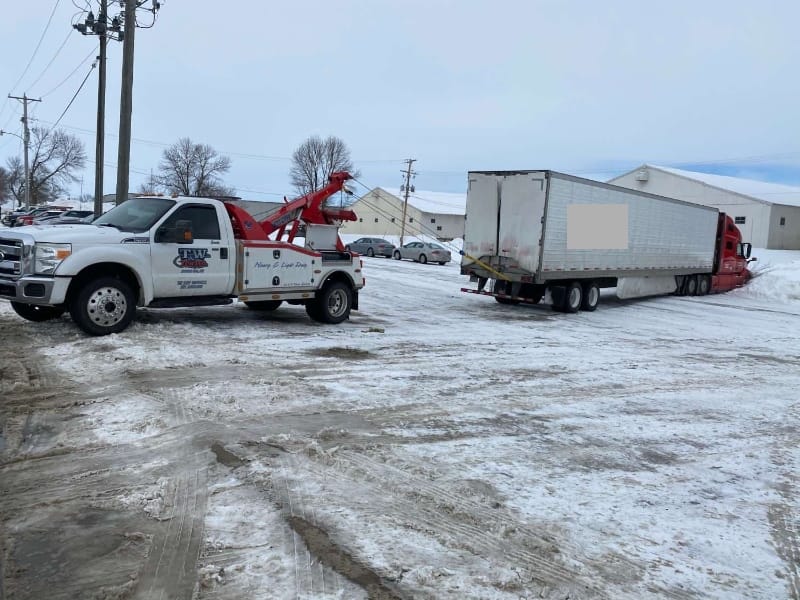
Winter is here! And if you’re anywhere near I-90 in Minnesota, you know it’s not playing around. We’ve got slick roads, sudden whiteouts, jackknifed rigs, and stuck semis. It’s the kind of weather that turns a routine trip into a test of patience and grit. Heavy towing in snow and ice isn’t just part of our job, it is the job during these brutal months. We handle I-90 heavy recoveryy calls daily, from semis in ditches to big rigs stranded on icy inclines.
The calls don’t stop when temperatures dip below zero, and neither do we. We’ve learned how to navigate these roads with precision and urgency, because every stalled truck or tangled trailer is part of a bigger chain. If it stops, the freight stops, and supply chains unravel fast.
What It Takes to Tow Big Rigs in Brutal Winter Conditions
When the roads turn to ice and the snow piles up faster than plows can keep up, most people stay inside. We do the opposite. Heavy towing in snow and ice demands fast thinking, the right gear, and a team that can work in freezing winds without missing a beat.
Frozen Roads, Frozen Steel
Snow alone doesn’t stop traffic. But once it compacts into ice, even the biggest trucks lose their grip. Rigs weighing thousands of pounds can end up sliding off the road or losing traction halfway up a hill. That’s when we roll out with chains, winches, and the muscle to get them moving again.
Jackknifes and Rollovers
One bad move on black ice and a trailer can swing around faster than you can blink. Jackknifed trucks block lanes, shut down stretches of I-90, and put drivers in real danger. Our crew knows how to respond fast, assess the scene, and execute a safe recovery before traffic backs up for miles.
Subzero Hazards
Besides the wrecks themselves, winter brings its own set of challenges. Hydraulic systems freeze. Metal parts seize. Visibility drops to near zero. We’re trained for this. We run cold-weather protocols, maintain winter-tuned rigs, and stay alert through every white-knuckled mile.
Time Matters When Freight Is On the Line
When a loaded truck can’t make it to the drop site, entire schedules fall apart. Construction sites stall, grocery shelves don’t get restocked, and businesses lose money by the minute. I-90 heavy recovery operations don’t just help one driver, they keep entire supply lines alive in the thick of winter.
How We Stay Ready
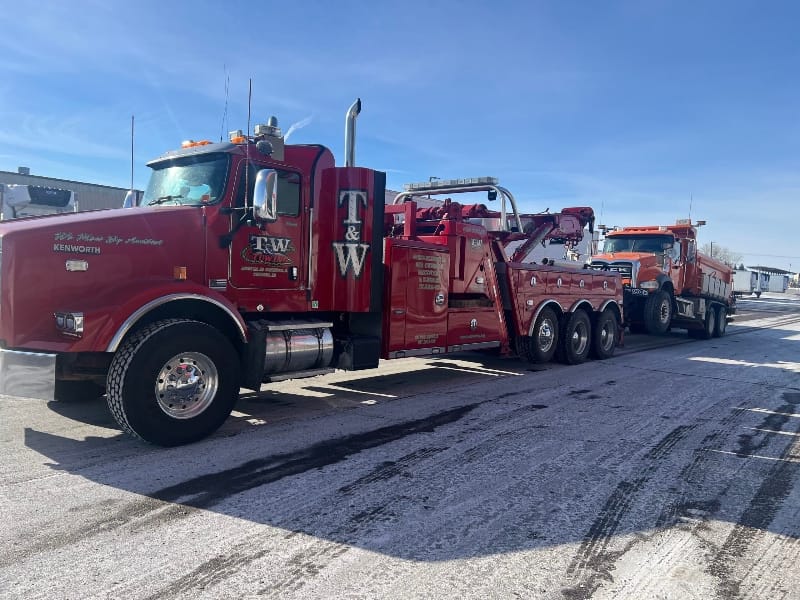
At T&W Towing, we’ve built our team and our fleet to meet Minnesota winters head-on. Our focus on I-90 heavy recovery work means we’re on high alert during snowstorms, and we’ve built routines to make sure nothing slips through the cracks when the ice hits hard.
Here’s how we stay ready:
- Cold-Weather Fleet: Our trucks are winterized and prepped for extreme cold so they’re ready to roll at a moment’s notice.
- Real-Time Dispatching: We track storms and traffic patterns so we can position rigs where they’re needed most.
- Experienced Operators: Every recovery crew member knows the terrain, the traffic, and the tricks of pulling 80,000-pound loads out of snowbanks.
- Quick Turnarounds: We work fast because minutes matter when freight is waiting.
Our I-90 heavy recovery services restore movement in the dead of winter. We’ve seen how one stuck semi can ripple through the system. So we hustle, we grind, and we keep going until the job’s done.
T&W Towing: I-90 Heavy Recovery You Can Count On
We’ve seen every kind of winter mess Minnesota can throw at us. From whiteouts in Owatonna to ice-coated hills near Albert Lea, our I-90 heavy recovery team knows how to get big trucks moving again. We don’t just wait for better weather, we respond in the thick of it.
With T&W Towing, you’re getting a team that’s trained for heavy towing in snow and ice and built for Minnesota’s roughest months. We answer the call, day or night, with the gear, the knowledge, and the drive to keep trucks trucking, supply chains intact, and winter freight on schedule.
Six times this season already, I-90 heavy recovery calls have brought us into blizzards, breakdowns, and back-to-back recoveries. And we’re just getting started. When winter throws its worst at I-90, we throw everything we’ve got right back.
FAQ
What should I do if my semi truck slides off an icy highway?
Stay inside the cab if it’s safe, turn on your hazard lights, and call for professional heavy recovery. Do not try to walk on icy roads or attempt to move the truck without help.
Can towing services operate during a snowstorm?
Yes, trained recovery teams operate in all weather conditions. They use winter-ready equipment and are prepared to respond during storms, even when visibility is low.
How long does it take to recover a large truck in the winter?
Recovery time depends on road conditions, truck position, and equipment access. A basic recovery may take under an hour, while complex jobs can take several.
What equipment is used to recover a stuck big rig?
Recovery teams may use winches, heavy-duty tow trucks, chains, and traction aids. The setup varies based on vehicle weight and location.
Is towing a loaded trailer harder in winter?
Yes. The added weight combined with icy surfaces can complicate recovery. It often requires additional equipment and strategic planning.
Do you monitor weather conditions in advance?
We do track forecasts and traffic to anticipate spikes in service needs. This helps us reduce response times during storms.